
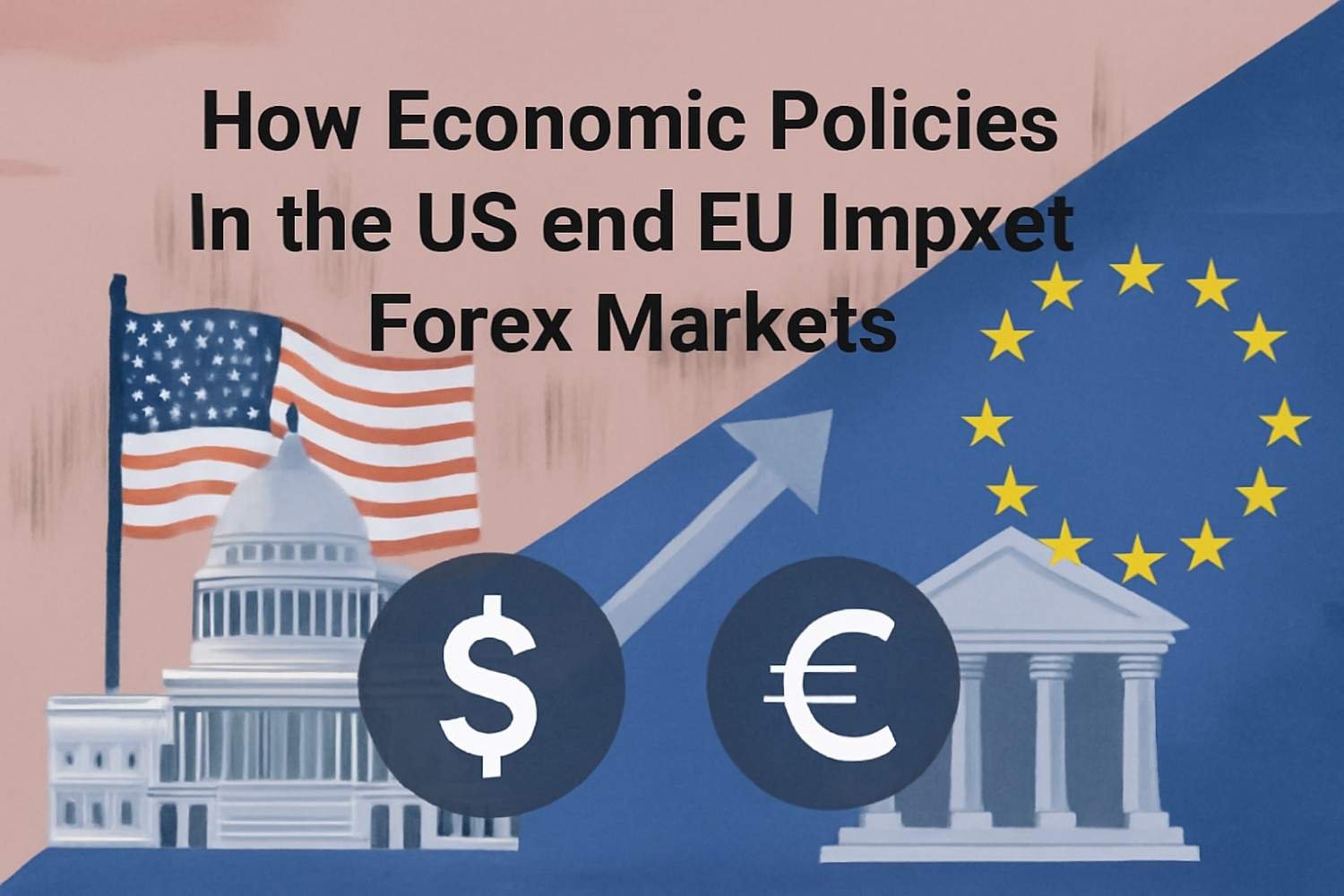
Economic policies in the United States and the European Union (EU) play a significant role in shaping the global forex market. These policies influence exchange rates, investor sentiment, capital flows, and market expectations. Since the US Dollar (USD) and the Euro (EUR) are the two most traded currencies in the world, the economic policies of both the US and the EU have a direct and profound impact on the forex market, not just for these two regions but for global financial markets as a whole.
In this article, we will explore how economic policies in the US and the EU impact forex markets, focusing on key factors like interest rates, fiscal policies, monetary policy, inflation, and trade balances.
1. Monetary Policy: The Key Driver of Currency Valuations
1.1 US Federal Reserve (Fed) and Its Impact on the USD
The Federal Reserve (the central bank of the United States) plays a critical role in influencing the value of the US Dollar and, by extension, the global forex market. The Fed’s monetary policy decisions directly affect interest rates, inflation targets, and money supply, all of which have an impact on the strength of the USD.
Interest Rate Changes:
One of the most significant tools the Federal Reserve uses to control the economy is the interest rate. When the Fed raises interest rates, it typically strengthens the US Dollar because higher rates make USD-denominated assets more attractive to foreign investors. Conversely, when the Fed lowers interest rates, the USD tends to weaken as the returns on US investments become less attractive.
Example: In periods of economic expansion, the Fed might raise interest rates to prevent the economy from overheating. This can lead to increased demand for the USD, as global investors seek higher yields. On the other hand, during recessions, the Fed may lower interest rates to stimulate economic activity, which could lead to a depreciation of the USD.
Quantitative Easing (QE) and Tapering:
Another tool used by the Federal Reserve is quantitative easing, a policy where the Fed buys government bonds and other assets to inject liquidity into the economy. This increases the money supply and can lead to a weaker USD. When the Fed reduces or “tapers” its asset purchases, it can lead to a stronger USD as the money supply grows at a slower pace.
Example: After the 2008 financial crisis, the Fed implemented several rounds of QE, which weakened the US Dollar initially, as more dollars were circulating in the economy. However, when the Fed began tapering QE in 2013 and started tightening its policies, the USD strengthened.
1.2 European Central Bank (ECB) and Its Impact on the EUR
The European Central Bank (ECB) is the central bank for the Eurozone, which comprises the 19 EU countries that have adopted the Euro as their currency. The ECB’s monetary policy significantly impacts the value of the Euro and, by extension, the global forex market.
Interest Rates and the EUR:
Just like the Fed, the ECB uses interest rates as a primary tool to control inflation and economic growth. When the ECB raises interest rates, it typically strengthens the Euro, as higher rates attract foreign investment. Conversely, when the ECB cuts rates, the Euro tends to weaken.
However, the ECB’s policies tend to be more complex due to the diversity of economies within the Eurozone. For example, while Germany may benefit from higher interest rates, peripheral countries like Greece or Italy could struggle with higher borrowing costs.
Quantitative Easing (QE) and Stimulus Packages:
The ECB has also engaged in extensive quantitative easing to combat economic stagnation in the Eurozone, especially after the sovereign debt crisis and the COVID-19 pandemic. This has involved the ECB purchasing bonds and other financial assets to inject liquidity into the economy, thereby increasing the money supply and potentially weakening the Euro.
Example: The ECB’s QE programs and low interest rates have kept the Euro weaker compared to the US Dollar, especially during periods when the Fed has raised rates. Conversely, when the ECB cuts back on its bond purchases or signals the end of QE, the Euro can strengthen against the USD.
2. Fiscal Policy: Government Spending and Taxation
2.1 US Fiscal Policy and Its Effect on the USD
Fiscal policy refers to government decisions regarding spending and taxation. In the US, fiscal policy is determined by Congress and the President, and it directly impacts economic growth, government debt, and the US Dollar’s strength.
Government Spending:
High levels of government spending can lead to an increase in the national deficit, potentially weakening the USD. For example, large-scale stimulus packages or infrastructure investments funded by debt can raise concerns about inflation or the government’s ability to repay its debts, which can lead to a decline in the value of the USD.
Example: The US government’s COVID-19 relief packages significantly increased the national debt, which put downward pressure on the USD. However, in the short term, the influx of stimulus money supported the economy and provided some support to the USD.
Taxation Policies:
Tax policy can also influence the strength of the US Dollar. For example, a reduction in corporate taxes may encourage businesses to repatriate profits from overseas, increasing demand for the USD. Conversely, tax hikes could result in a decrease in economic activity and potentially weaken the currency.
2.2 EU Fiscal Policy and the EUR
In the EU, fiscal policy is primarily determined at the national level, but the European Union enforces certain limits on government debt and deficits through the Stability and Growth Pact. This agreement aims to maintain fiscal discipline across the Eurozone. However, the fiscal policies of individual EU countries can still influence the value of the Euro.
Government Spending in the Eurozone:
High levels of government spending in the Eurozone, especially in countries with large public debts like Italy and Spain, can lead to concerns about the sustainability of the Euro. Countries with large deficits may have to rely on borrowing, which can weaken the Euro as investors sell off Euro-denominated bonds.
Example: During the Eurozone debt crisis, the fiscal policies of heavily indebted countries like Greece and Portugal put pressure on the Euro. The ECB stepped in with monetary support to stabilize the currency.
EU’s Fiscal Stability and Austerity Measures:
The EU has often imposed austerity measures on countries facing financial instability, which can limit government spending and reduce the money supply, strengthening the Euro. Conversely, expansive fiscal policies, such as those seen in France or Italy, could weaken the Euro if markets perceive them as unsustainable.
3. Inflation Control and Impact on Currency Strength
3.1 Inflation and the US Dollar
Inflation has a profound impact on the strength of the US Dollar. The Federal Reserve closely monitors inflation levels and adjusts its monetary policy accordingly. If inflation is rising too quickly, the Fed may increase interest rates to cool down the economy and curb inflation. Higher interest rates can attract foreign capital, strengthening the US Dollar.
Example: When inflation in the US surged in 2021-2022, the Fed began signaling interest rate hikes, which led to a strengthening of the USD as traders anticipated a more hawkish Fed stance.
3.2 Inflation and the Euro
Inflation is also a key factor influencing the Euro. The ECB aims to maintain inflation close to its target of 2%. If inflation is too high, the ECB may raise interest rates to stabilize prices, which could strengthen the Euro. On the other hand, if inflation is low or deflationary pressures are present, the ECB may lower rates or introduce QE programs, potentially weakening the Euro.
Example: In 2021, rising inflation in the Eurozone led to increased market speculation about future ECB rate hikes. This contributed to periodic strengthening of the Euro against the US Dollar.
4. Trade Balances and Currency Value
4.1 US Trade Deficit and the USD
The US has had a trade deficit for many years, meaning it imports more than it exports. A persistent trade deficit can put downward pressure on the US Dollar, as it means the US is purchasing more foreign goods and services than it is selling abroad, increasing the supply of USD on global markets.
However, the US Dollar remains strong because the USD is still the world’s primary reserve currency, and the US has strong economic and financial infrastructure that attracts investment, offsetting the trade deficit.
4.2 Eurozone Trade Surplus and the Euro
Unlike the US, the Eurozone typically runs a trade surplus, meaning it exports more goods and services than it imports. This surplus tends to support the Euro, as foreign buyers need to purchase Euros to pay for European exports. The trade surplus makes the Euro less susceptible to depreciation compared to the US Dollar.
Example: When the Eurozone exports more than it imports, demand for the Euro increases, strengthening the currency. Conversely, a widening trade deficit would likely weaken the Euro.
Conclusion
Economic policies in both the US and the EU have a significant impact on the forex markets, particularly on the value of the US Dollar and the Euro. Central banks, government fiscal policies, inflation targets, and trade balances all influence currency values, shaping the dynamics of global forex trading.
-
US policies such as interest rate decisions by the Federal Reserve, fiscal spending, and inflation control measures have a direct impact on the strength of the US Dollar.
-
EU policies, including decisions made by the European Central Bank and national governments, influence the value of the Euro, with trade balances and inflation control being key factors.
For forex traders, staying informed about the economic policies in both regions is essential to navigating the fluctuations in the forex market.