
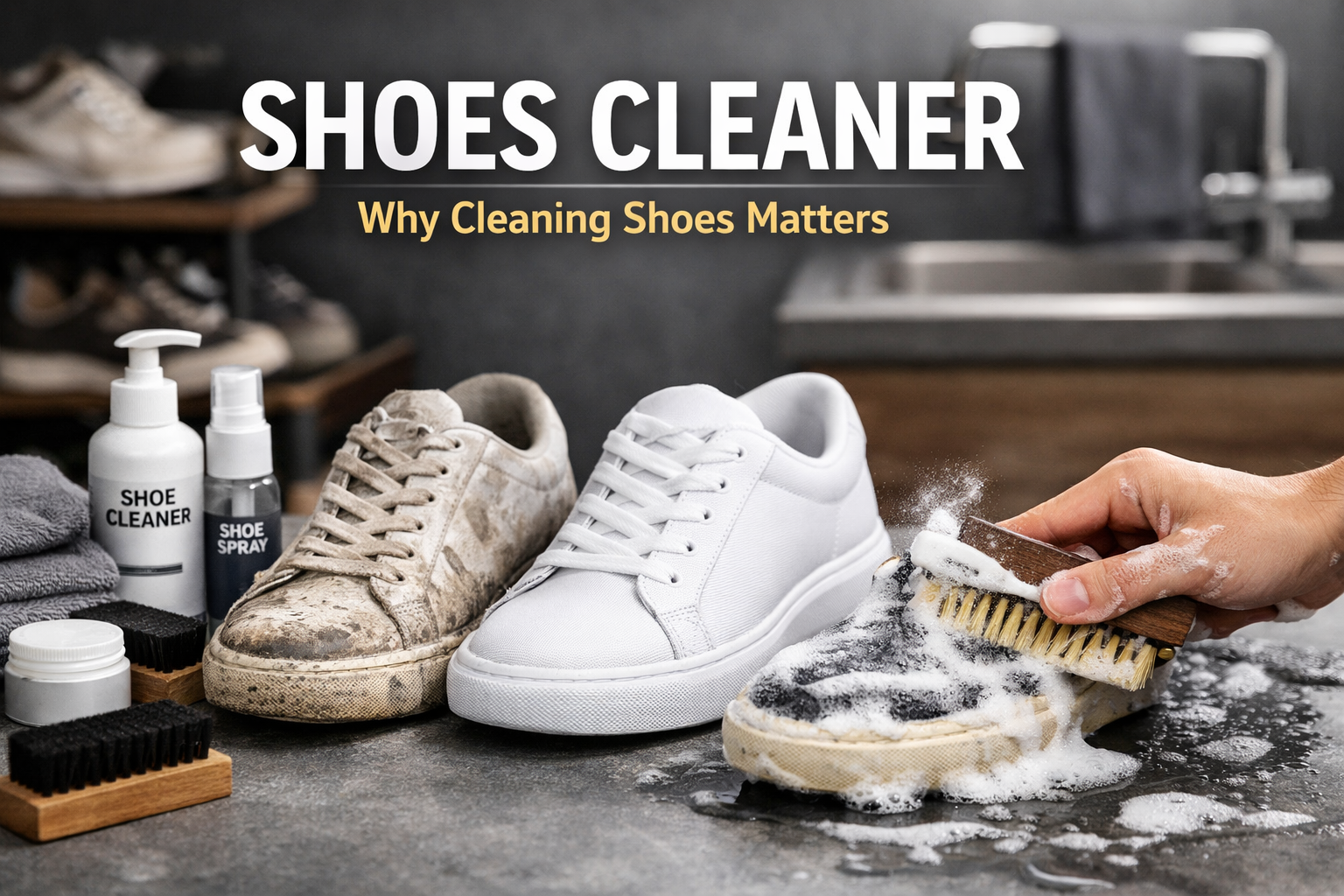
Why Using a Shoe Cleaner Extends Your Footwear’s Life
Using a proper shoe cleaner does more than remove dirt. It is a protective measure. Regular cleaning stops long-term damage before it starts. This practice keeps your shoes looking new and performing well for years.
Your shoes are an investment in your style and comfort. A dedicated shoe cleaner is the most important tool for protecting that investment. This guide explains why cleaning matters and provides a complete plan for shoe care. You will learn how to extend the life of your footwear, maintain its appearance, and build a simple, effective shoe care kit. We cover methods for all materials, from leather dress shoes to canvas sneakers, with tips suited for Saudi Arabia’s climate.
How dirt and grime damage shoe materials over time
Dirt is abrasive. When you walk, small particles grind against the shoe’s surface. On leather, this slowly wears away the protective finish and dye. For suede and nubuck, dirt gets embedded in the nap, matting the fibers and causing permanent discoloration. On athletic shoes, mud and salt can degrade adhesives and synthetic materials. A shoe cleaner removes these abrasive particles, preventing this slow, unseen wear.
Grime also holds moisture. In humid conditions, this moisture can lead to mold or mildew inside the shoe. It can also cause leather to dry out and crack once the moisture evaporates. Cleaning removes this grime, allowing materials to breathe and stay dry.
The financial benefit of cleaning versus replacing shoes
High-quality shoes are a significant purchase. A simple shoe care kit costs a fraction of the price of a new pair. Regular maintenance with a shoe cleaner and conditioner can double or triple the lifespan of leather boots or dress shoes. This turns a cost into long-term savings.
Think of cleaning as preventative maintenance. Replacing worn-out soles or heels is a minor repair. Replacing the entire upper because of cracked, stained, or ruined material is often impossible or not cost-effective. A consistent cleaning routine protects the most valuable part of your shoe.
Essential Tools for an Effective Shoe Care Kit
A good shoe care kit is built for specific tasks. You do not need many tools, but you need the right ones. The right brush, cleaner, and protector make the cleaning process effective and safe for your shoes.
Must-have brushes for different shoe materials
Brushes are your first line of defense. Use a soft-bristle brush for dusting off dry dirt from delicate materials like suede. A medium-stiff brush works well for scrubbing canvas and synthetic athletic shoes. For leather, a horsehair brush is ideal. It is firm enough to remove dirt but soft enough not to scratch the surface. Having two or three dedicated brushes prevents cross-contamination of cleaners and dirt between shoe types.
Choosing the right cleaners and conditioners
Never use a one-size-fits-all shoe cleaner. Leather requires a pH-balanced cleaner that lifts dirt without stripping natural oils. After cleaning, a leather conditioner replenishes these oils to prevent cracking. For suede and nubuck, use a specialized dry cleaner or foam that lifts stains without soaking the material. Canvas and mesh sneakers often do well with a mild soap solution or a dedicated sneaker cleaning formula. Always test any new cleaner on a small, hidden area first.
The role of protectants and shoe polish in maintenance
Cleaning is only half the job. A protectant spray creates a barrier against water, oil, and dirt. Apply it to clean, dry shoes. For leather, shoe polish is essential. It does more than add shine; it nourishes the leather and fills minor scuffs, restoring color and providing a protective layer. A quality shoe polish in the correct color is a key part of preserving style and extending your shoe’s life.
Step-by-Step Guide to Cleaning Different Shoe Types
Each shoe material has unique needs. Following the correct steps ensures you clean effectively without causing harm. This process starts with the right shoe cleaner for the job.
How to clean leather dress shoes and boots
First, remove the laces. Use a horsehair brush to remove all loose dirt. Apply a small amount of leather shoe cleaner to a damp cloth and wipe the entire surface. For stubborn spots, use a soft brush. Wipe away all cleaner residue with a separate damp cloth. Let the shoes air dry away from direct heat. Once dry, apply a leather conditioner with a clean cloth. Finally, apply shoe polish with a applicator cloth, let it dry, and buff to a shine with a polishing brush.
Safely washing canvas sneakers and athletic shoes
Remove the laces and insoles. Brush off dry dirt. For the uppers, create a solution of mild detergent and cool water. Use a soft brush to gently scrub the canvas. For rubber soles and midsoles, a dedicated sneaker shoe cleaner and a stiffer brush work well. Rinse with a damp cloth—avoid soaking the shoes. Stuff them with paper towels to hold their shape and let them air dry. For more detailed care, see our guide on Running Shoes.
Special care for suede and nubuck materials
These materials are sensitive to water. Always start with a suede brush or eraser to lift surface dirt and scuffs. For stains, use a specialized suede/nubuck shoe cleaner, typically a dry foam or spray. Apply it, let it dry, and then brush the nap back up. Never use standard liquid cleaners or polish on suede, as they will stain and mat the fibers permanently.
Preserving Style: Advanced Cleaning and Maintenance Tips
Beyond basic cleaning, a few advanced techniques keep your shoes looking their best. These tips focus on stain removal, shape retention, and climate-specific storage.
Removing stubborn stains without damaging color
For oil-based stains on leather, sprinkle a small amount of cornstarch or talc to absorb the oil before brushing. For ink, use a cotton swab with a tiny amount of rubbing alcohol, but test on an unseen area first. On white rubber soles, a paste of baking soda and hydrogen peroxide can lift yellowing. Always use the gentlest method first and spot-test any stain remover.
Restoring shape and preventing creases
Use shoe trees for leather shoes. They absorb moisture and maintain the shoe’s form, preventing deep creases. For sneakers, use crumpled paper or specific sneaker shields when storing. If shoes lose their shape, lightly dampen the inside with a mist of water, insert a shoe tree or stuffed sock, and let them dry. This can help smooth out minor wrinkles.
Seasonal storage tips for Saudi Arabia’s climate
Heat and dust are the main concerns. Before storing shoes for a season, clean them thoroughly with a shoe cleaner and allow them to dry completely. Apply a protectant spray. Store shoes in their original boxes or breathable cloth bags in a cool, dry closet. Avoid plastic bags, as they trap humidity. Placing silica gel packets inside the shoes can help control moisture in the air.
Building Your Perfect Shoe Care Kit
You can assemble a shoe care kit at any budget level. The goal is to have the right tools for the shoes you own most. Here are recommendations for different levels of commitment.
Budget-friendly starter kit for beginners
A basic kit needs only a few items: a soft and a medium brush, a multi-surface sneaker shoe cleaner, a neutral color leather conditioner, and a can of waterproofing spray. This covers the needs for most casual leather shoes, sneakers, and boots. You can find these items at most department stores or online retailers in KSA.
Premium kit for the dedicated shoe care enthusiast
This kit includes specialized tools. It would have separate cleaners for leather, suede, and sneakers. It includes a set of horsehair brushes for polishing and cleaning, several colors of high-quality shoe polish, a leather rejuvenator, a suede eraser and brush set, and a last or shoe tree for each pair of dress shoes. The investment matches a serious commitment to footwear longevity.
Product recommendations available in KSA
Many international brands are readily available. Look for cleaners and conditioners from brands like Saphir or Collonil for leather care. For general sneaker and athletic shoe cleaning, kits from Jason Markk or Reshoevn8r are popular and effective. These products are stocked by specialty retailers and major online platforms in Saudi Arabia.
Common Shoe Cleaning Mistakes to Avoid
Even with good intentions, wrong techniques can ruin shoes. Knowing these common errors helps you protect your footwear during cleaning.
Using harsh chemicals that degrade materials
Household cleaners like bleach, ammonia, or strong detergents are too abrasive. They strip dyes, dry out leather, and break down adhesives in athletic shoes. Always use a product designed as a shoe cleaner for the specific material you are cleaning.
Improper drying techniques that cause damage
Never place shoes on a radiator, in direct sunlight, or use a hair dryer to speed up drying. Intense heat causes leather to crack, glue to melt, and materials to warp. Always let shoes dry at room temperature with good air circulation. Stuffing them with paper towels helps absorb internal moisture.
Neglecting regular maintenance between deep cleans
Waiting until shoes are visibly dirty puts stress on the materials. A simple routine makes deep cleans easier. After each wear, wipe leather shoes with a dry cloth. Brush off dirt from suede. Knock the soles of sneakers together to remove debris. This daily habit prevents buildup and makes your periodic use of a shoe cleaner much more effective.
Ready to Give Your Shoes the Care They Deserve?
Begin today. Assess your most-worn shoes and identify their material. Purchase a single, appropriate shoe cleaner and brush. Set aside thirty minutes this week to clean and condition one pair. You will immediately see the difference in appearance, and you will start the habit of protecting your style and your investment for the long term.
Conclusion
A dedicated shoe cleaner and a simple care routine are the keys to preserving your footwear. This practice protects your financial investment and maintains your personal style. By understanding material needs, using the right tools, and avoiding common mistakes, you can significantly extend the life and appearance of every pair you own. Start with a basic shoe care kit and build from there.
(FAQs)?
How often should I clean my everyday shoes?
For shoes worn daily, a quick wipe-down or brush-off should happen after each use. A full clean with a shoe cleaner and conditioner should be done every 4-6 weeks, depending on use and conditions. In dusty environments, you may need to clean more frequently.
Can I use household products instead of a dedicated shoe cleaner?
It is not recommended. A small amount of mild soap diluted in water can work for some canvas items in a pinch, but it is a risk. Household products are not formulated for shoe materials and can cause discoloration, drying, or damage. A dedicated shoe cleaner is a safer, more effective choice.
What’s the best way to clean white sneaker soles?
Use a stiff-bristle brush and a dedicated sneaker shoe cleaner. For ground-in dirt or yellowing, make a paste of baking soda and a small amount of hydrogen peroxide or water. Apply the paste, scrub gently with the brush, let it sit for 10-15 minutes, then rinse. Avoid bleach, as it can weaken the rubber.